| Author |
Messages |
dannparks
Unregistered

|
      
 Posted Sunday, November 19, 2006 @ 04:14 PM Posted Sunday, November 19, 2006 @ 04:14 PM
My fuel float it cracked and leaking. Also, the metal standpipe with the small hole that faces forward it badly rusted. I want to take it all apart, but I can't seem to remove the float from the wire completely -- desoldering it removes the float, but leaves a small crimped-on fitting. Is there another wire-and-float that can replace it? Maybe a generic replacement part that I can install through the cap and bend the top of the wire over after installation?
Thanks
--------------------
|
Admin
Unregistered
|
Posted Sunday, November 19, 2006 @ 04:56 PM
www.wagaero.com have a float repair kit for $10. It is intended for a J3 but may have usable parts. I bought 1/16" brass brazing rod (non-flux coated) from the welding store, pushed it down through the new float and then soldered a washer on top and below the float to lock it in place. Slide the new wire through the cleaned up cap and tube and then bend the end over at the appropriate place.
Steve
|
dannparks
Unregistered
|
Posted Monday, November 20, 2006 @ 12:14 PM
Thanks the tip. So the only thing used from the repair kit is the float part? I flew a Taylorcraft BC12 for awhile that had a float and wire system, just like the RF4, with a cork float. Could a hardware store cork work? I can't seem to find a Taylorcraft replacement.
--------------------
|
Collin
Unregistered
|
Posted Monday, November 20, 2006 @ 12:45 PM
Hi,
Here is picture of Bob Grimsteads float.
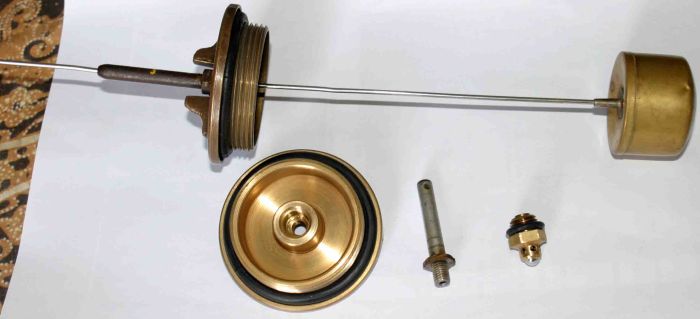
--------------------
|
Jorgen
Unregistered
|
Posted Saturday, September 1, 2007 @ 03:08 PM
Hello,
just a comment on cork floats. I think they work fine (=not electronic), but a friend who flew a Piper Cub L-4 to Germany had a total engine failure after refuelling. He was on his way to the oldtimer/glider-fly-in at Hahnweide in south Germany- it´s on again next weekend and there will be Fournier attendance (RF 4 D-KAQI, D-KALG). Alas not by me, although that was my intention. Anyway, it turned out that the alcohol content of the fuel (slightly higher in Germany than in Sweden) had dissolved the varnish on the cork float (and possibly the gaskets in the carburator couldn´t cope with the solvents either) so the carb was plugged up.
This has been discussed in the “Engines”-“AutoGas?” thread. Make sure the cork varnish (and also the carb gaskets- I think they need to be silicone-based to be safe) can cope with alcohol, especially if you want to use auto gas. Bob´s varnishless float is another way of avoiding the problem.
Another comment also on the float: if the wire is slightly curved (or corroded) it can stick in the tube. That can make you believe you have more fuel left than you actually have. It has happened to me a couple of times and I´m sure a lot of you has had similar experiences. It´s a little eerie to find you flew around on fumes trusting your supposedly error-free floatwire. It´s wise to be suspicious if your floatwire doesn´t bob up and down and turn a little every now and then. I think a bent-end floatwire is better than a knob-end float wire (like on SE-XST)- a bend can turn so it gives better indication that the wire is not stuck. To check that the floatwire moves freely is a good pre-flight routine.
Just 4 fun, take 5(b)/ Jörgen, SE-XST
[Edit by Jorgen on Monday, September 3, 2007 @ 06:17 AM]
|
sericson
Unregistered
|
Posted Monday, September 3, 2007 @ 04:56 PM
Years ago I had my Taylorcraft cork float fail after using autogas. The red varnish failed quickly.
I used Safety Poxy (Then the Rutan LongEZ epoxy) to coat the float and had no problems afterwards.
Heat the float in an oven to about 200 degrees for an hour before coating with room temperature epoxy. This will draw the epoxy in as the float cools. I gave mine 2 coats with heating prior
It would be smart to cure some epoxy first and store it in a can of auto gas for a few weeks to determine compatibility. Some will turn to "ear wax" in days when exposed to alcohol.
Steve
RF-4D N505SE
|
flyingkroeger
Unregistered
|
Posted Tuesday, November 20, 2007 @ 08:58 PM
Hi Folks,
My float is cork and looks shocking – as a matter of fact it fell off when we disassembled the aircraft. I couldn’t find the float repair kit on the WagAero site, any ideas where I can get a brass float like Bob’s?
BR
Tim
|
flyingkroeger
Unregistered
|
Posted Wednesday, November 21, 2007 @ 06:39 PM
Hi Guys,
Just a thought: Since buoyancy (spelling?) is not critical, as long as the float carries the wire and some additional "stickiness", why no try any old brass or aluminium (that's "aluminum" for the US) carburettor float.
In this regards, since my bird is still in its cage, what's the diameter of the tank opening - just roughly so I do not buy too big a float.
Thanks in advance.
BR
Tim
|
Markku
Unregistered
|
Posted Thursday, November 22, 2007 @ 04:25 AM
| Quote: |  | | Originally posted by flyingkroeger
In this regards, since my bird is still in its cage, what's the diameter of the tank opening - just roughly so I do not buy too big a float.
|
|
Opening diameter is 48mm
BR
Markku
|
cooperman
Unregistered
|
Posted Monday, November 26, 2007 @ 05:31 PM
ps must also add the correct wire length. Although not the end of the world have been finishing flights with the wire on the bottom stop but based on the clock and what goes back in is about 2 gals remaining. Anyone advise on the 'correct' length using this float. Just to save the experimenting!!
|
Collin
Unregistered
|
Posted Monday, November 26, 2007 @ 06:26 PM
Hello,
Can Bob or Eugenio give a wire length when using a brass float?
|
SteveBeaver
Unregistered
|
Posted Monday, November 26, 2007 @ 08:07 PM
Presumably the float must sit on the floor of the tank when indicating empty? How else could it be?
Steve
|
Collin
Unregistered
|
Posted Monday, November 26, 2007 @ 09:07 PM
Hi,
Here is what in is the flight manual.
"Zero length means 1.32 US gallons (1.1 Imp gallons) remains"
(4.98 liters) about 1/2 flight time
|
Collin
Unregistered
|
Posted Tuesday, November 27, 2007 @ 05:00 PM
Hi,
The floats I just got are wrong I will look for more.
Collin
|
Bob Grimstead
Unregistered
|
Posted Tuesday, November 27, 2007 @ 09:23 PM
Hi Guys,
I'm sulking at home this week, having only come 5th out of 7 entrants in the annual Western Australian aerobatics competition.
I expect to go back to the airfield on Sunday and will measure the float wire then.
Yours, Bob
|
Jorgen
Unregistered
|
Posted Wednesday, November 28, 2007 @ 05:16 AM
Bob,
5 is not too bad (although 4 is better) so cheer up. I bet you a crate of Red Bull they were just beeing envious and if the debate concerning the green-house effect continues to gain momentum all overpowered, fuel-guzzling aerobatic machines will be grounded so everyone will have to fly Fourniers at next years event. As the song goes: "-Remember that the last laugh is on you!!!"
Take 5(b) just 4 fun/ Jörgen, SE-UDI, SE-XST
|
Bob Grimstead
Unregistered
|
Posted Wednesday, November 28, 2007 @ 09:38 PM
Thanks Jorgen,
In fact, I would have been 4th, but the locals deduct 10% from the score of anybody who has ever held a professional licence. Don't ask me why, I don't understand it either, but them's the rules!
To be honest, valiant little thing that she is, the RF4 is not really ideal for the straight vertical and rigid 45-degree lines of contest aerobatics, but much better suited to a gently flowing, curving display sequence. See Mick Poole's recent video on Collin's site: www.cfiamerica.com.
Yours, Bob
|
Collin
Unregistered
|
Posted Friday, November 30, 2007 @ 02:29 PM
Hello,
I went to the Ford dealer this morning a found a float that will work good with out having to do any soldering. I bent a 3/32" (2.25mm) stainless welding rod around a 1" pipe and then bent it 90 degrees. Have a look at the pictures. I Rf4 is still on the stand I will raise the tail to simulate level flight and put 1.3 gallons of gas and measure the length of the rod. Here is the part number of the float COAZ*9202*B the price I paid was $10.13. If anyone want a float and bent wire let me know.
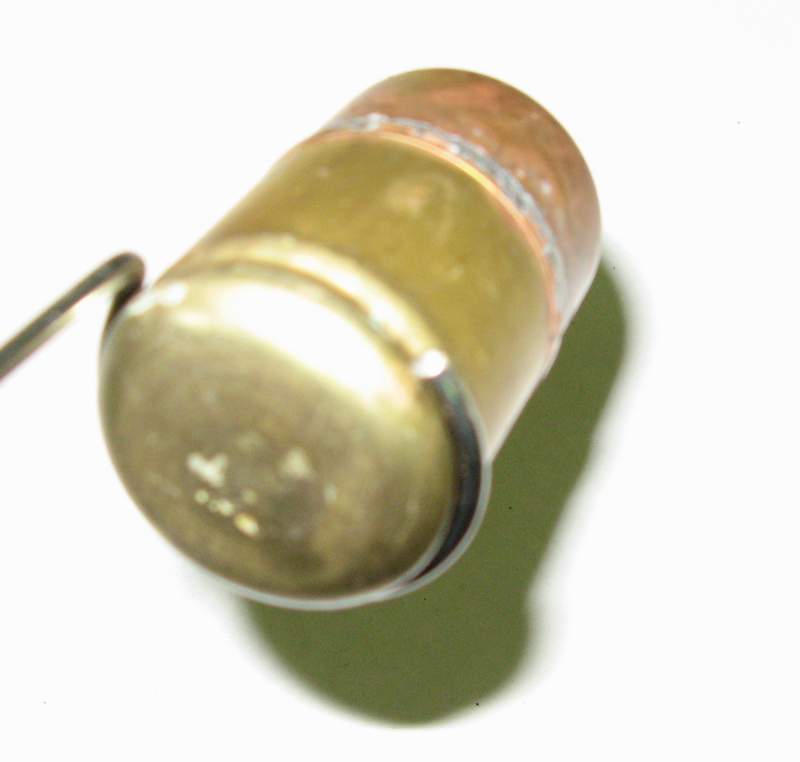
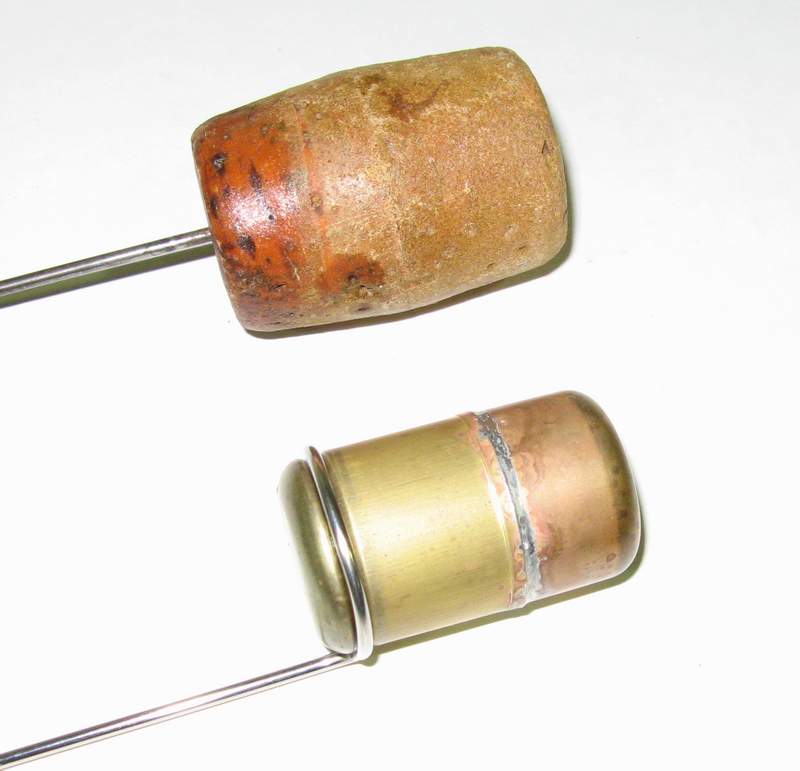
|
Jorgen
Unregistered
|
Posted Friday, November 30, 2007 @ 04:40 PM
Hi Collin,
nice craftmanship. Could there be a risk for the rod to get stuck in the fuel-cap tube because of the offset of the float?
Take 5(b) just 4 fun/ Jörgen, SE-UDI, SE-XST
|
Collin
Unregistered
|
Posted Friday, November 30, 2007 @ 06:07 PM

|
Bob Grimstead
Unregistered
|
Posted Monday, December 3, 2007 @ 03:51 AM
Hello folks,
I have just measured my fuel float wire at 12 inches / 30 cm from the bottom of the float (resting on the bottom of the tank) to the right-angled bend at its top.
An important parameter is the length of the tubing protruding upwards from the cap's top (I think mine is the original) but if in doubt, merely allow your float to rest on the bottom of the tank and bend the wire as it protrudes above the cap.
Then lift the aeroplane's tail to the level flight attitude and add fuel to your tank until the float starts to float. Then that's how much fuel you have left when the float stops bouncing in flight -- time to land -- quick!
I hope that is of use to somebody.
Yours, Bob
|
Bob Grimstead
Unregistered
|
Posted Monday, December 3, 2007 @ 03:55 AM
By the way, if you look at the photo of my aerobatic fuel cap up above on this thread, you will see that there is only a single forward-facing hole to pressurise the tank in flight. As somebody wise pointed out to me at the Gap-Tallard get-together, that could be blocked by a single bug -- very disappointing.
So I have now drilled three more forward-facing holes, and I advise anybody else with the aerobatic cap to do the same.
Yours, Bob
[size=small][Edit by Bob Grimstead on [TIME]1196991515[/TIME]][/size]
|
Collin
Unregistered
|
Posted Wednesday, December 5, 2007 @ 01:23 PM
Hello,
I found that having the float horizontal worked better than vertical. I also going to try a aluminum wire that is lighter than the stainless wire. The stainless wire was heavy enough that it needed 2 gallons of gas to float.
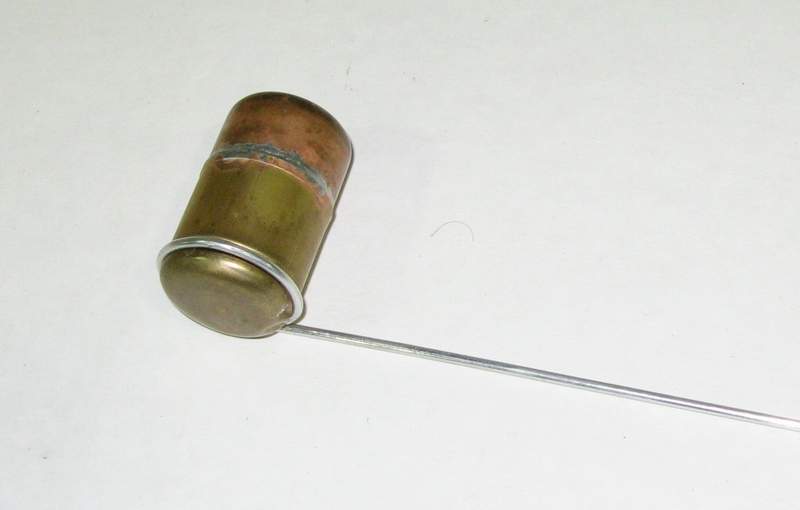
|
Collin
Unregistered
|
Posted Thursday, December 6, 2007 @ 02:23 PM
Hi,
The aluminum wire did not work out good. So I will make them out of stainless.
|
Jorgen
Unregistered
|
Posted Saturday, December 8, 2007 @ 02:23 PM
Hi,
as an alternative to Collin´s horizontal brass float I found a couple of suggestions on the same original question about floats on J3cub.com.:
“-I think the best solution is a brass float - 0.010 brass sheet. Make a cylinder 3" long and 1.375 in diameter. Seems bulletproof...from Cub Clues newsletter #48, page 9./ George”
“-A cork float painted with hot fuel dope from a hobby shop works well.”
“-Univair has a new fuel cap with gage, I do not have the part number, but call 1-888-433-5433.”
“-The best float I found can be bought at Lowes Building Suppplies and a number of other places - it is a small aluminum container that is for refilling butane cigarette lighters-cost about $3 - - the top comes off and the gas cap rod goes snugly down thru the hole in the top of the container and a little epoxy around it and there it is - I have been using this for 2 years - works very well and no cork debris in the fuel - -the container weighs about 1/2 ounce - another identical container available is a small travel shave cream container - same thing/Paul Robbins”
“-If you´re not afraid of cross dressing. Ladies´ clear nail varnish works a miracle. I got the idea from Cub Club News many years ago. Two or three coatings can be got out of one bottle ... cheapest variety./Patrick”
Be sure to use a proper disguise when you shop for lady´s varnish 
Take 5(b) just 4 fun/ Jörgen, SE-UDI, SE-XST
|
sericson
Unregistered
|
Posted Monday, December 10, 2007 @ 02:52 PM
I would caution everbody about using unknown materials to seal cork floats. My experience has been poor in the presence of alcohol. Soak test before you fly! Note changes in the softness of the coating and discoloration of the fuel.
Steve
--------------------
|
Jorgen
Unregistered
|
Posted Tuesday, December 11, 2007 @ 05:23 AM
Absolutely Steve,
my apologies for posting without commenting on that. I just thought it funny that there are so many different opinions. Incidently, I´m quite satisfied with my cork floats. Since they are a tad heavier than a brass float there should be less risk of false indication of too much fuel if the wire gets stuck in the fuel cap.
Take 5(b) just 4 fun/ Jörgen, SE-UDI, SE-XST
|
joethepro
Unregistered
|
Posted Wednesday, February 6, 2008 @ 07:54 PM
to minimize the time my cork float is submerged i put a clothes pin on the rod (after pulling it up) and since it is in front of my nose i seldom forget it ..... and if i do i alwas have a full tank!
|
Sam M.
Unregistered
|
Posted Wednesday, April 30, 2008 @ 11:45 PM
.
[Edit by Sam M. on Wednesday, April 30, 2008 @ 11:48 PM]
|
flyingkroeger
Unregistered
|
Posted Friday, May 9, 2008 @ 02:46 AM
Hi All,
Can someone post some details of the aerobatic fuel cap – sorry, I looked everywhere, but I cannot seem to find it. Am I right assuming that it incorporates a gravity type non-return valve to allow airflow into the tank when upright?
BR
Tim
|
