Posted by Bob Grimstead on Wednesday, May 13, 2020 @ 04:54 AM:
Hello fellow frustrated Fournicators,
This is an amateur giving you info on how he attempted to solve a problem, and not necessarily how you should solve it. I got advice from Britain's 'Mr Fournier', Dave Bland, but he should not be blamed for any mistakes I've made.
One of the Camlok fasteners kept falling out of my lower cowling, so a repair was in order.
This is how I did it. First I drew two long right-angled lines in Sharpie permanent marker on the outside to indicate the centre of the replacement hole when the repair was finished. Then I taped over the hole with shiny self-adhesive aluminium tape, in the centre of which I put a small disc of that tape so the resin wouldn't stick to it.
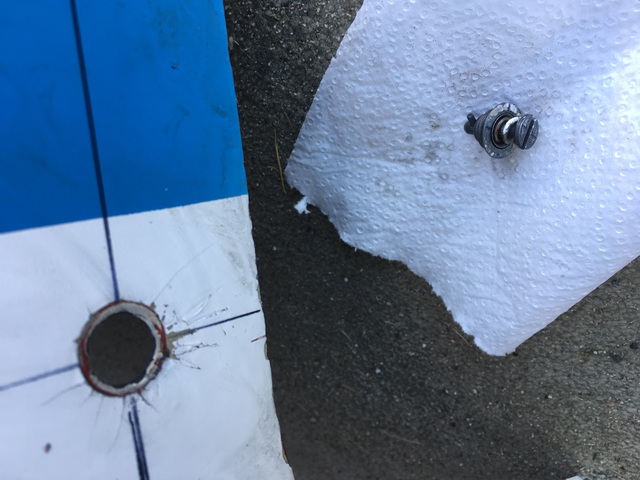
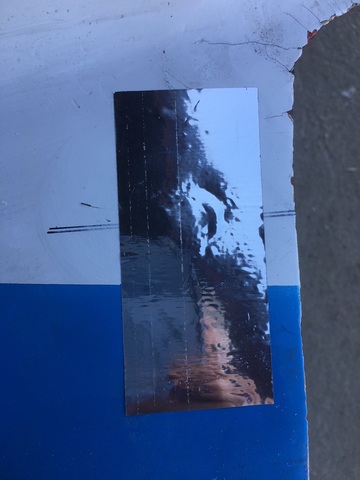
Then, broadly using this Diamond repair scheme,
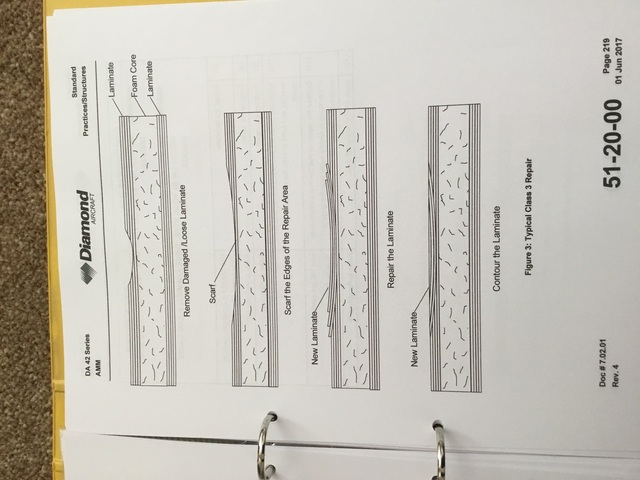
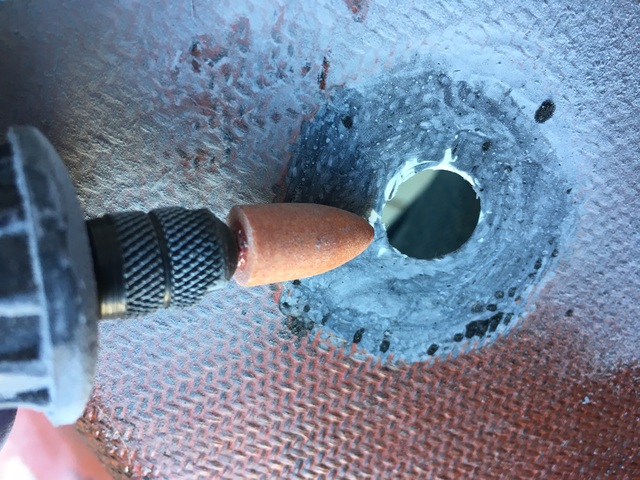
I chamfered (scarfed) out a wider circular area with my Dremel (actually a cheaper Ozito).
Cutting out discs of woven glassfibre was harder then it looks, but I guess they don't have to be absolutely circular.
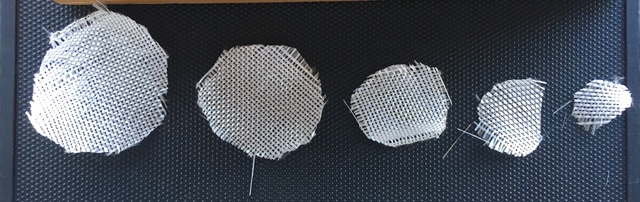
I used West System epoxy, mixed (very approximately by eye) at five-to-one. It seemed odd to,put the big disc in first with the smaller ones successively on top of it, but Dave assured me that was the correct way to do it.
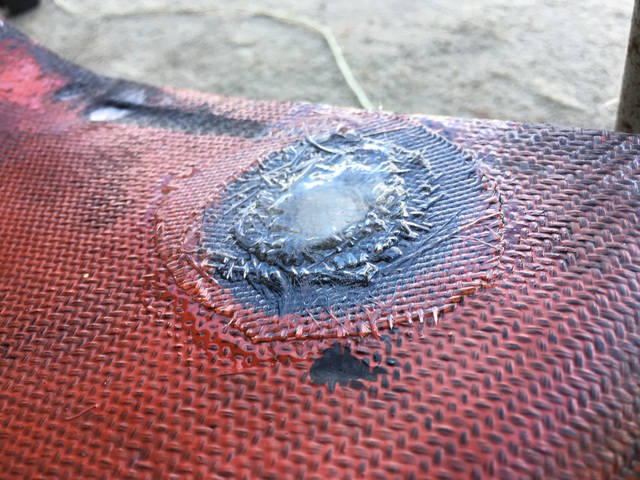
Then, because it is a tad chilly here in Perth's autumn, I carefully speeded the chemical reaction a little with the heat gun.
The inside result doesn't look too bad to my untutored eye, although it's obviously a bit bubbly, too thick and will have to be sanded down.
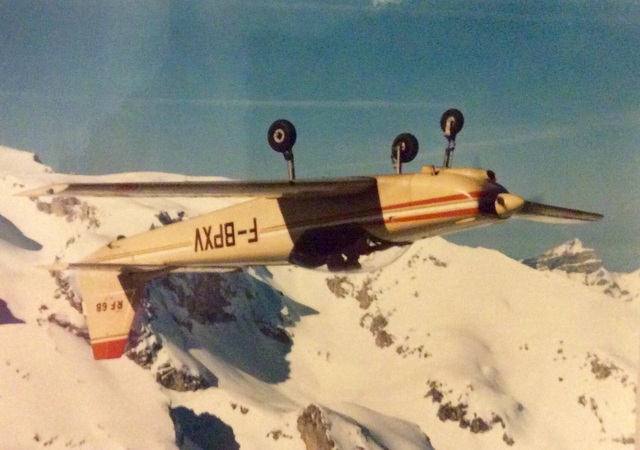
Tomorrow I'll check the outside, fill where necessary, drill the hole and pop back the Camlok.
[Edit by Bob Grimstead on Wednesday, May 13, 2020 @ 05:02 AM]
[Edit by Bob Grimstead on Friday, July 31, 2020 @ 11:16 PM]
--------------------
Posted by dannparks on Sunday, May 17, 2020 @ 10:13 PM:
Like a pro, Bob. Nice job.
Resin will also not stick to duct (duck) tape - for future reference. Although the aluminum tape leaves a smoother surface finish.
--------------------
Posted by SteveBeaver on Monday, May 18, 2020 @ 09:01 AM:
Do we know what type of resin was used in the factory? I would think that in the 1960s polyester would be the only choice, but I really have no idea.
Posted by Bob Grimstead on Sunday, May 24, 2020 @ 06:42 AM:
Hi Steve,
Unfortunately I have no way of knowing. The drawing doesn't seem to say:
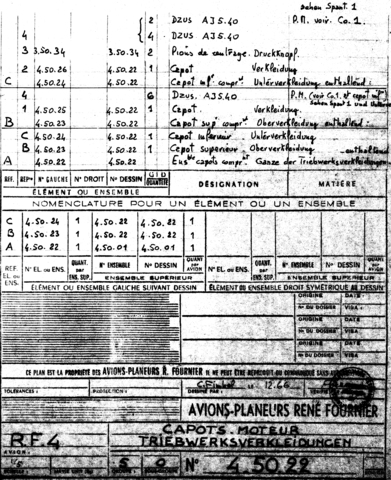
It's probably a 1968 cowling and I repaired it with epoxy resin, but was that wrong?
Interestingly, as you can see, the drawing specified Dzus fasteners, but all Fourniers I've ever known actually use the superior Camloks.
[Edit by Bob Grimstead on Sunday, May 24, 2020 @ 06:44 AM]
--------------------
Posted by Donald on Monday, May 25, 2020 @ 06:02 AM:
Interesting remark about Camloks, Bob. My RF3 has Dzus fasteners in the cowl.
Maybe Sportavia preferred Camloks.
About resins, my recollection of making minor repairs to my cowl is that from the smell of grinding/sanding the stuff the originals would have been polyester, but epoxy seems to stick to it perfectly well.
Posted by Bob Grimstead on Monday, May 25, 2020 @ 09:18 PM:
Thanks for that info Donald. I just wouldn't know the difference in smell between polyester and epoxy.
Fascinating that your RF3 has Dzus fasteners. From experience, I find they don't locate cowlings as well as the more expensive Camloks, although they're much easier to replace. Yes maybe Camloks were a Sportair preference, but my Aussie one has them too, so maybe also the Germans (Sportavia) preferred them. Like so many things, reality superseeded the drawings, which I'm sure were simply re-captioned RF3 drawings anyway.
Later today, given time, I'll finish this story, Bob
--------------------
Posted by Bob Grimstead on Friday, July 31, 2020 @ 11:29 PM:
The fastener on the other side was just as old, so I guessed that would soon go the same way and removed it to patch that area too.
This is how the repairs looked from the outside with the shiny tape removed
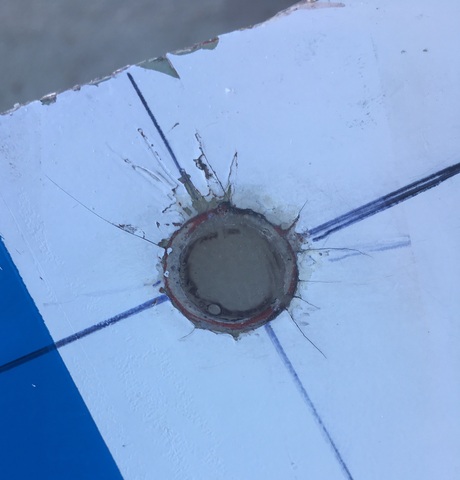
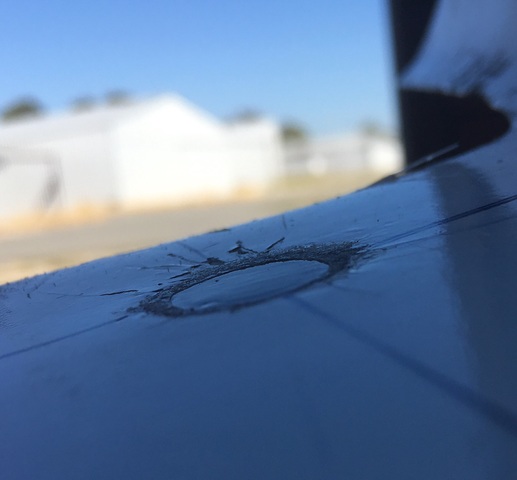
There was also a split at the front of the cowling and a couple of areas where the engine had fretted against it, so I resolved to patch those areas as well.
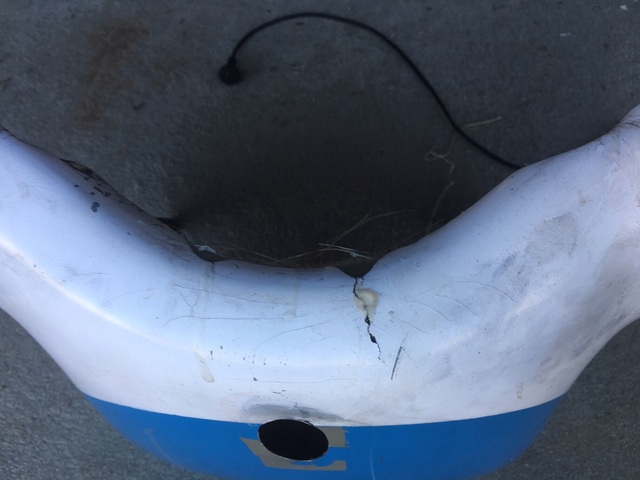
The previous repair (ten years ago, by a friend) clearly wasn't strong enough.
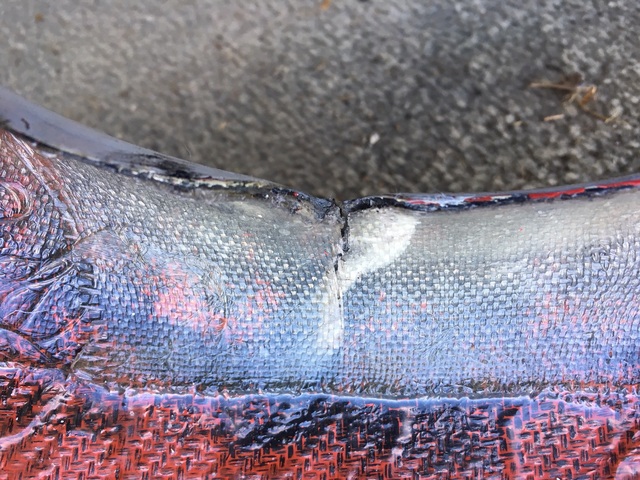
I carefully cleaned the areas I was going to work on with avgas to dissolve the oily patina. I deliberately left the other parts of the cowling oily so that afterwards I could easily peel off any unwanted dribbles or runs.
Here are the front and abrasion repairs with the excess dribbles peeled off the oily parts.
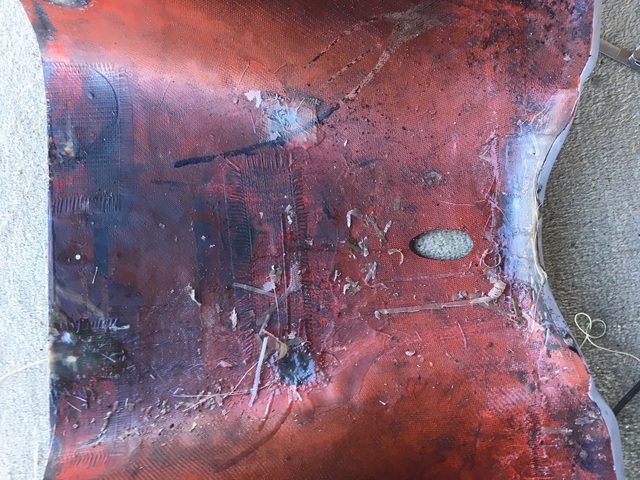
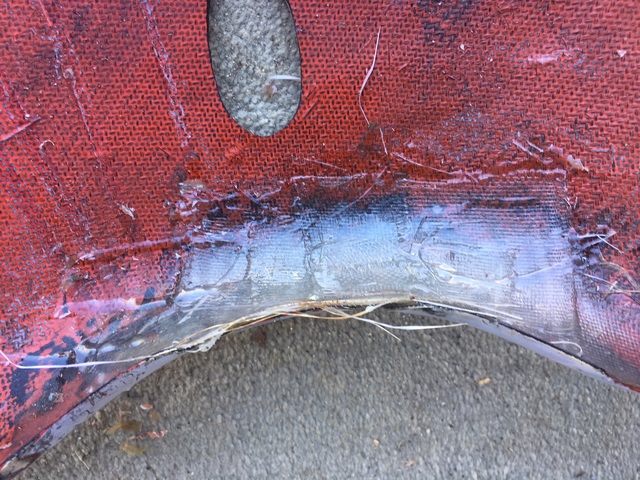
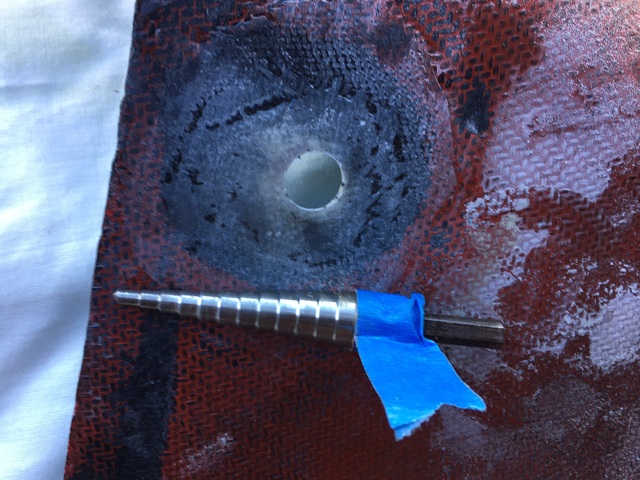
Once the resin had set hard (three days), I extended those crosses back to their centres, made a pilot hole with an eighth-inch bit and then drilled out the Camlok holder holes with my Irwin Multi-bit.
--------------------
Posted by Bob Grimstead on Friday, July 31, 2020 @ 11:36 PM:
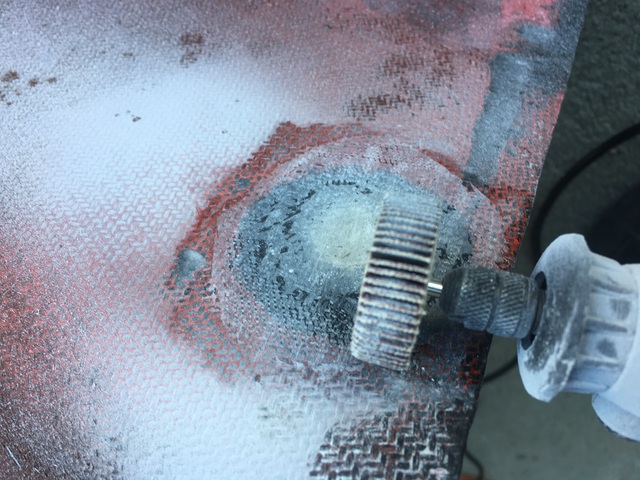
I had to sand down the insides of a couple of the repairs where they were a bit too proud. For that I used a flap-wheel in my drill.
Dave Bland told me he glued the holders in place with epoxy resin to prevent vibration causing a recurrence, and that seemed a good idea, so I did the same thing, but rather than using resin, I used Araldite epoxy adhesive.
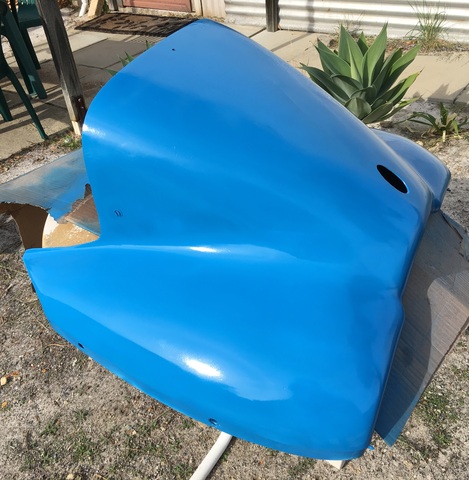
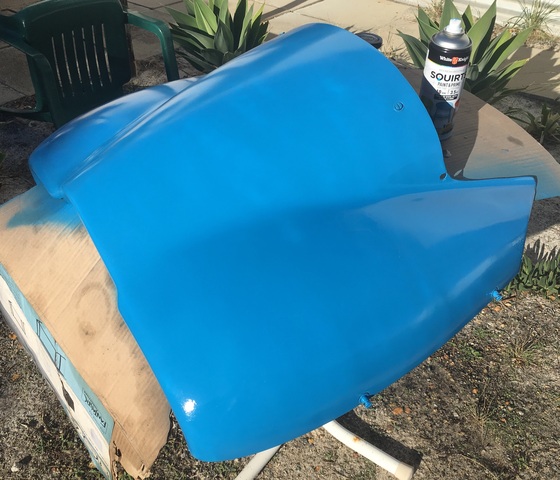
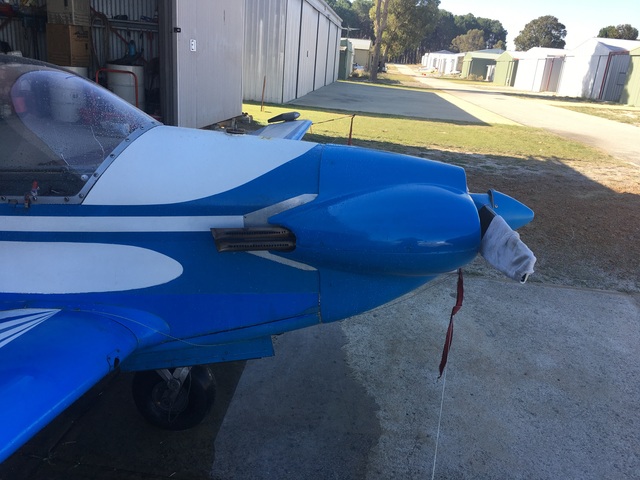
Finally, a few passes with an aerosol can of Bermuda blue enamel and my cowlings finally both fit well and correspond to the correct, original Fournier colour scheme.
--------------------

